
Case Study: Fixing Harsh Vocals on Premium Gear
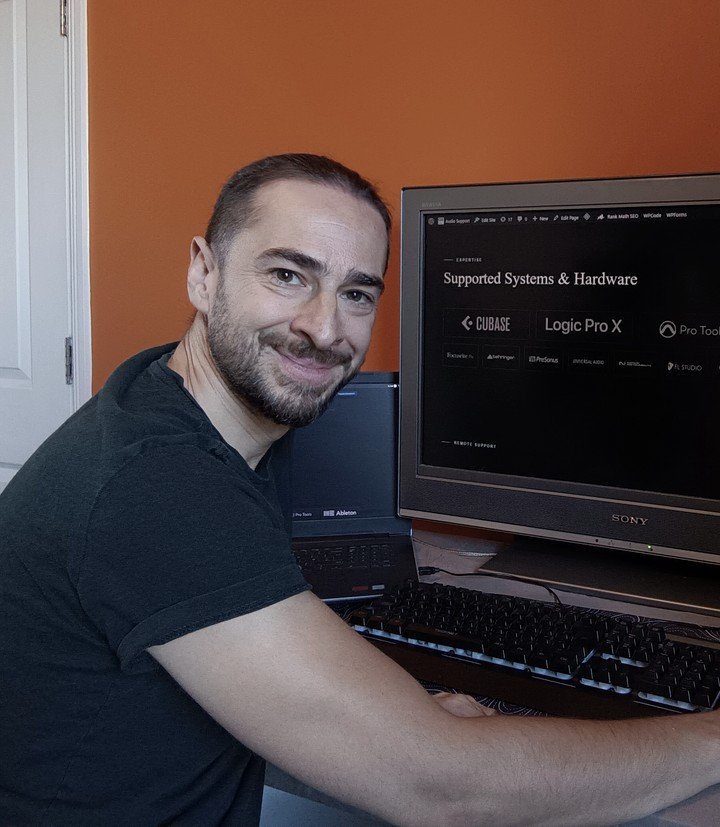
- Client
- A guitarist and producer
- Setup
- Neumann TLM 103, Neve 1073, Universal Audio Apollo, Ableton Live
- Problem
- Thin, harsh vocals despite a top-end recording chain
- Fix
- Corrected the Neve 1073’s gain staging, repositioned the mic and pop shield, and cut 200Hz from the backing track
The Challenge

A talented guitarist and producer reached out in a state of understandable frustration. He had invested in a truly first-class recording chain: a Neumann TLM 103 microphone running into a magnificent Neve 1073 preamp and a Universal Audio Apollo interface. Despite this high-end equipment, his vocal recordings were coming out sounding thin, harsh, and disappointingly ‘crispy’. He had been hoping I could help him process his vocals for a more polished sound, but his creative process was completely blocked by a technical issue he couldn’t pinpoint.
What I did
We connected remotely, and my first step was to have the client bypass every single plugin in his Ableton vocal chain to hear the raw, unadulterated audio. The problem wasn’t a software bug; it was a fundamental architectural conflict in the hardware setup—specifically, a classic case of incorrect gain staging on the Neve 1073.

- Optimising the Source: We raised the microphone slightly to encourage better posture and moved the pop shield to a standard four to six inches for effective plosive protection.
- Calibrating the Preamp: We bypassed the EQ to isolate the sound of the preamp, then set the input gain knob to around the +20dB mark, providing enough signal without overloading the input stage.
- Adjusting Output Levels: With the singer performing, we used the output level controller to bring the signal up to a robust, clean level inside the Apollo Console software, ensuring meters peaked well below 0dB.
- Creating Mix Space: To further enhance the vocal, we placed an EQ on the main backing track and made a gentle 4dB cut around the 200Hz range, carving out a dedicated space for his baritone voice.
The Result
The transformation was immediate. The harshness was gone, replaced by a full, rich, and professional vocal tone. Crucially, with a clean source signal, we could now use processing to enhance the sound, not to perform emergency surgery. The client left the session with a deeper understanding of his own equipment and the excitement to re-record his songs with confidence.
This article was originally published as a field case study on my sister site, Audio Support, and has been adapted for Amazing Audio.
Got a problem like this?
Send me a short clip and tell me what’s going on. I’ll reply in writing by the next UK working day, and it’s free.
Get a free diagnosis